Campaign
Babelfish: challenging Reform and right wing media bias
March 24, 2026

February 10, 2026By: Team Dale
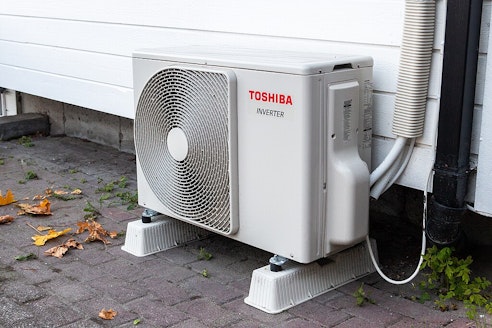
Rip-off energy bills are creating a cost-of-living crisis, and the government has promised to get a grip on them. Cue the new Warm Homes Plan that will spend £15 billion to cut costs and decarbonise our homes. It’s mostly good, but at the centre of the plan is a £2.7 billion commitment to help households buy heat pumps with grants of up to £7,500.
That £2.7 billion could be better spent. The cold, hard facts show that for millions of us, heat pumps will only mean higher energy bills and unaffordable upfront costs, even with government help. To show why, we’ve dug into the official data and surveyed over 1,000 heat pump owners.
Heat pumps are designed to turn electricity into heat. The more efficiently they do that, the cheaper they are to run. But once they’re out of the lab and into real houses, the data shows that they fail to live up to their promised efficiency in 92% of cases. And we’re not talking about a rounding error. On average, the heat pumps in UK homes are 17.9% less efficient than advertised.
As electricity is more expensive than gas (roughly 3.86 times the price) a heat pump has to be very efficient just to break even with a gas boiler. In terms of the numbers, that means heat pumps need to achieve a performance factor of 4. However, the data shows that most operate around 2.8, and that leads to running costs that are 24% higher than a modern gas boiler.
Our survey backed this up: 66% of heat pump owners reported their homes are now more expensive to heat compared to when they had a gas boiler. And while heat pumps that work efficiently cost less to run, they don’t necessarily translate to warm homes. Every house is different, but 42% of respondents to our survey listed effectiveness as the main challenge of owning a heat pump.
To make matters worse, the 92% of heat pumps not reaching their promised efficiency are the lucky ones. Before the government-funded study even began, a third of the properties they planned to survey weren’t included because making them heat pump-ready was too expensive or not technically feasible. This reveals a deeper issue: millions of British homes are effectively unsuitable for heat pumps due to the massive cost of the renovations required to make them work.
Unlike gas boilers, heat pumps work best when maintaining lower temperatures for longer periods of time. That means they need radiators with large surface areas, well-insulated homes and, often, wider pipes to work well and keep running costs down. Our survey showed that the average paid for a heat pump and these associated home upgrades was £13,351, and that doesn’t include the cost of insulation, which is something that 95% of those surveyed also had installed.
These costs will exclude many working-class households from taking advantage of the £7,500 grant because they can’t afford the additional costs not covered by the government. As a result, this funding risks becoming a middle-class subsidy that only helps already well-off households pay for heat pumps.
On paper, an air source heat pump can cut heating emissions by around 70% compared to a modern gas boiler. But, skimp on the retrofits, and you’ll likely end up with an inefficient, poorly adapted heat pump. And that won’t just hurt financially – it will also reduce the environmental benefits of ditching a gas boiler in the first place.
One of the biggest factors in heat pump efficiency is flow temperature, which is simply the temperature of the water sent from the heat pump into radiators or underfloor heating. Small radiators and poor insulation demand higher flow temperatures, but this has a dramatic impact on performance.
At a flow temperature of 35°C, a heat pump produces around 3.5 units of heat for every unit of electricity used. Raise that to 55°C, and performance drops to 2.4. Push it above 65°C, and it falls to just 2.0. To be considered renewable, a heat pump must reach at least 2.5.
That matters for carbon because lower efficiency means more electricity is needed to deliver the same heat. Since electricity is most carbon-intensive in winter – exactly when heating demand is highest – poor efficiency wipes out a large chunk of the promised emissions savings.
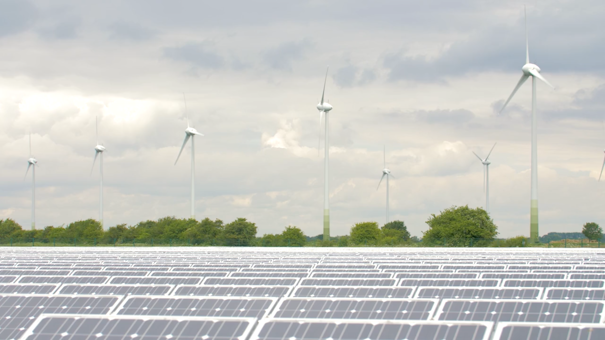
Many homes can genuinely benefit from heat pumps, but we must be realistic and recognise they are not a universal solution. Instead, if we spent the money on solar panels, we could install them on a million homes and halve their bills. And if we ensured that working households were prioritised, the money would have maximum impact in reducing the misery caused by rip-off energy bills.
Before long, the panels would have paid for themselves, but the cheap, clean green energy would keep flowing for years to come.