


Campaign
Babelfish: challenging Reform and right wing media bias
March 24, 2026

With illegal releases and escapes from enclosures, it’s been a bumpy road, but now it’s finally official. Beavers are beating the controversy to return to Britain’s wild spaces.
After laying the groundwork (and some heavy-duty fences), Ecotalk and the Green Britain Foundation have prepared our Bowyers Wood site in East Sussex for a couple of our furry friends to call home soon. But with all the fantastic things beavers do for nature, the question is, why has it taken so long for us to be allowed to help welcome them back to Britain?
It’s been 400 years since beavers were hunted to extinction in Britain, and 26 years since they popped up again in Scotland from origins unknown. So it’s taken more than a quarter of a century to get to the point where they can be released (with a licence) into our rivers. But all we had to do was take a look abroad to see that it was always a good idea.
Just like Britain, Sweden used to be barren of beavers. But in 1922, they realised they had made a mistake and brought a pair over from Norway to repopulate. Safe to say, it went pretty well, and the country is now home to over 150,000 of the creatures living right across its river system.
A hundred years is a lot of time to monitor their impact, and far from causing havoc, the findings are overwhelmingly positive – especially for biodiversity and forest composition.
And, just as importantly, Sweden’s beavers have shown how they can win the hearts of their human neighbours, including those of their biggest critics – landowners.
Sweden’s number one beaver advocate, the ecologist Göran Hartman, writes that landowner-beaver relations follow a familiar pattern of initial joy, then friction once trees start falling and dams spring up, ending with acceptance and peaceful co-existence. That’s one of the reasons he labelled Sweden’s release of its two Norwegian beavers over a century ago as “one of the most successful reintroductions ever”.
Britain is now joining the long list of countries to follow in Sweden’s footsteps and embrace the beaver, but the process for actually getting a licence to release them into the wild is still long and arduous. Scotland is doing better with 1,500, but England is still only home to an estimated 500 (mostly illegally released) beavers, despite the ban being lifted over a year ago.
That this native species is considered disruptive enough to require ten-year management plans and the support of all neighbouring landowners is telling. For too long, we have tried to control nature by keeping the bits we like and killing the bits we find inconvenient. So we concrete over floodplains, fill our soil with chemicals and pump sewage into our rivers.
But doing so has made Britain one of the most nature-depleted countries in the world, and now it’s taking its toll on us. Ironically, this desire to completely control the natural world is both the main obstacle to beavers returning and the reason we urgently need them back.
A huge and avoidable chunk of the problem stems from our dependence on eating animals. If it weren’t for our consumption of meat, dairy and other animal foods, we could give back more than 50% of our land to nature. That means it could become wilderness again, rich with all the wildlife that our entire civilisation – the air we breathe, the water we drink, the economy we work in – depends upon.
Suddenly, with half the country to roam in, a few beaver-flooded ditches become a lot less of a worry. And, in return, we get free, natural flood defences, cleaner water and thriving ecosystems.
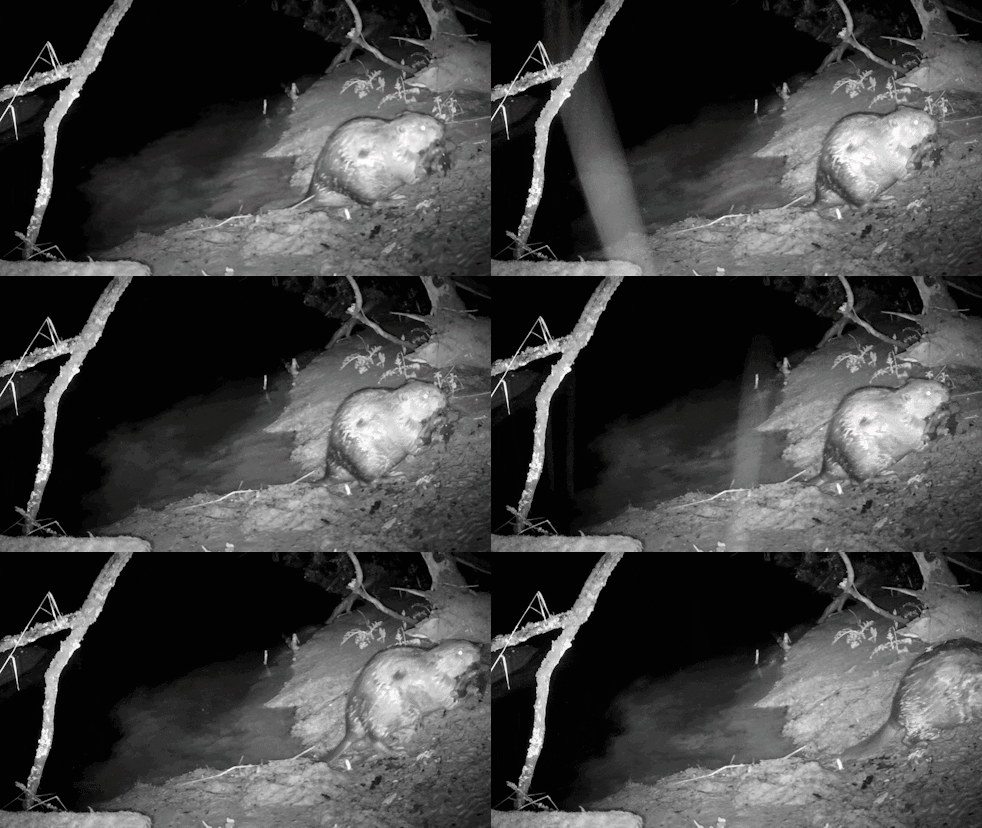
Plus, we’ll have the marvel of witnessing beavers performing their role as nature’s engineers and shaping the world around them (something you can see now on Ecotalk’s nature cams from the Great Britain Foundation’s Downicary wetlands).
Sounds like a dam good deal.