Government
Peoplenomics: Putting People Back at the Heart of Britain’s Economy
September 26, 2026

August 11, 2026By: Team Dale
Britain’s housing crisis looks pretty bleak whichever way you come at it. We don’t have enough homes, the ones we do have cost too much and 1.3 million households are waiting for social housing.
But change the lens and the picture looks very different. Because sitting under our noses is enough land for around 1.4 million homes, almost enough to meet the government’s entire target of 1.5 million new homes by 2030.
And we don’t need to concrete over the countryside to do it.
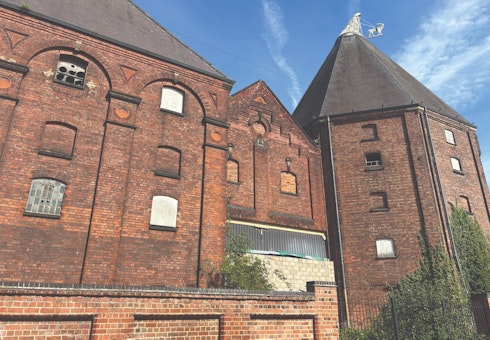
We’re talking about brownfield, the old factories, depots, garages and car parks that litter towns and cities across England. Places that have been developed before and are now sitting empty or underused.
Babelfish commissioned CEBR to look at every brownfield site identified by local authorities as suitable and available for housing-led development. The result is pretty extraordinary. There’s room for around 1.4 million homes and just under 700,000 of them, roughly half, already have planning permission. You can explore what's near you on our brownfield site map here
So we have a housing crisis on one hand and a massive amount of suitable land on the other. The obvious question is... why aren’t we building on it?
There are obstacles, of course. Our planning system is slow and under-resourced, construction costs have risen and we have a shortage of skilled workers. Small and medium-sized builders, which accounted for around 40% of new homes in the late 1980s, now build barely 10%.
None of these are small problems. But none are good reasons to ignore the opportunity either.
Because brownfield is about much more than finding somewhere to put houses. The economic case is enormous.
CEBR found that the construction work itself could create £89 billion of economic value over ten years. Once we include the supply chains that housebuilding supports, and the money workers then spend throughout the economy, the total rises to £259 billion.
That works out at roughly £26 billion of additional economic value and 370,000 jobs every year for a decade. For every £1 of value created directly through construction, another £1.92 is supported elsewhere in the economy.
That’s not a cost, it’s an investment.
And this is where we’ve been looking at housing all wrong. We tend to talk about building social and affordable homes as something worthy but expensive, another demand on the Treasury. The numbers tell us the opposite.
Building 1.4 million brownfield homes could add around 0.9% to GDP every year for a decade. We get the homes we desperately need and an economic boost at the same time.
And importantly, that growth would not all pile into London.
The North West has brownfield capacity for around 215,000 homes, while the West Midlands has space for 189,000. Birmingham alone could accommodate more than 105,000. Nearly two-fifths of the potential economic benefit sits across the Midlands and North, while almost a fifth would land in England’s most deprived tenth of areas.
That makes brownfield development something else as well: regeneration.
Instead of starting from scratch in open countryside, we can bring neglected parts of existing towns and cities back into productive use, creating homes and jobs in places that need both. At the same time, we protect natural habitats and the green belt and can create denser communities with a lower carbon footprint.
That’s the bigger opportunity here.
We’ve spent years talking about the housing crisis as though every answer requires some painful trade-off. Spend billions or don’t build. Build homes or protect nature. Help people or grow the economy.
Brownfield blows those false choices apart.
As as been argued before, change the lens and housing starts to look like an opportunity. A serious brownfield building programme gives us homes, jobs, economic growth and regeneration while protecting the countryside.
We have the land. We know where it is. Nearly half already has permission to build.
There are 1.4 million homes waiting beneath our feet.
Let’s get building...:)
Government
September 26, 2026
Campaign
September 18, 2026
Government
September 12, 2026
Energy Crisis
August 28, 2026