Government
Five Policies For Growth
October 20, 2026

November 11, 2026By: Team Dale
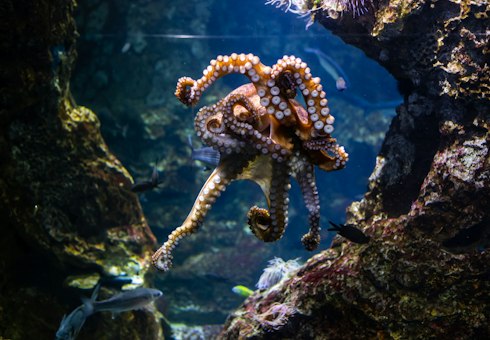
The world's first industrial octopus farm has been scrapped, and good riddance. After years of controversy, Spanish seafood giant Nueva Pescanova has abandoned its plans to breed and slaughter nearly one million octopuses every year at a facility in Gran Canaria. It's a victory for animals, our oceans and the campaigners who fought to stop it. But it raises a bigger question. If we recognise the cruelty of factory farming octopuses, why do we continue to accept it for billions of other animals?
The proposed farm was an extraordinary example of everything wrong with our industrial food system. Nueva Pescanova planned to produce around 3,000 tonnes of octopus meat annually, keeping these intelligent, solitary creatures in crowded tanks before slaughtering them. The company even described the operation as sustainable, despite the enormous resources required to keep it running. Octopuses are carnivores, meaning their feed would have relied on fishmeal and fish oil, putting further pressure on wild fish populations and the wider marine food chain. Add the energy, water and waste associated with the operation, and the sustainability claim looks pretty ridiculous.
Then there's the suffering these animals would have endured. Octopuses are remarkable creatures, capable of solving problems, learning and exploring their surroundings with an intelligence that continues to amaze scientists. They're naturally solitary animals, yet the proposed farm would have confined them in tanks, creating conditions associated with stress and aggression. And when their short lives were over, the plan was to kill them by plunging them into freezing water at minus three degrees Celsius, a method animal welfare experts warned could cause considerable suffering.
It's hard to imagine a clearer example of the lengths we're prepared to go to turn living creatures into products. Taking an animal that belongs in the ocean, stripping away everything that makes its life worth living, feeding it other animals caught from the wild and eventually killing it for food. All dressed up as innovation and sustainability. There's nothing sustainable about that.
Years of opposition from scientists, campaigners and animal welfare organisations helped expose the cruelty of this proposal, and while the company cited changes to the project's requirements when withdrawing its application, public pressure ensured its environmental and ethical consequences couldn't be ignored. It's an encouraging result, but the problems exposed here go far beyond octopuses. They're the same problems we've created through an industrial livestock industry in which the number of farmed mammals and poultry has increased by half in two decades.
Factory farming treats living, feeling creatures as units of production, with the aim of producing as much meat, dairy and eggs as cheaply as possible. The animals pay the price, and so does the planet. More than 85 billion land animals are slaughtered for meat worldwide each year, alongside trillions of fish and shellfish. We've become so accustomed to figures like these that it's easy to forget what they mean. Every one of those animals was a living creature, and the scale of our consumption is transforming the natural world.
Humans, livestock and pets now account for around 95% of the total weight of mammals on Earth, leaving just 5% for wild mammals, from elephants and tigers to whales and bats. Farmed poultry account for roughly 71% of global bird biomass, compared with just 29% for wild birds. We've filled the planet with animals bred for slaughter while pushing wildlife out of its natural habitat, contributing to a biodiversity crisis that's already threatening ecosystems around the world.
The resources needed to sustain this system are equally staggering. Around 80% of agricultural land is used for livestock, either for grazing or growing their feed, yet animal products provide only a fraction of the calories we consume. Animal agriculture places enormous demands on freshwater, while agriculture as a whole accounts for around 70% of global freshwater withdrawals, adding to growing concerns about water scarcity. Research into livestock production shows just how much water is tied up in feeding animals. We rightly focus on fossil fuels and transport when discussing climate change, but we cannot solve the climate and nature crises without changing what we eat.
And here's the thing, we already know the alternative. Growing crops for people to eat directly, rather than feeding them to billions of animals, would require far less land and fewer resources, while freeing up enormous areas for nature to recover. We should be supporting farmers to move away from animal agriculture towards growing healthy plant-based food, creating a food system that works for people and the planet rather than continuing to prop up one that's failing both.
The cancellation of Nueva Pescanova's octopus farm is worth celebrating, although the company hasn't ruled out octopus farming altogether. The campaign has shown that determined public opposition can help stop projects that once looked inevitable, and now we need to apply that same determination to the rest of the industry. If factory farming is too cruel for octopuses, it's too cruel for chickens, pigs, cows and fish too. The answer isn't to find new ways of factory farming animals. It's to end factory farming altogether.
Government
October 20, 2026
Government
September 26, 2026
Campaign
September 18, 2026
Government
September 12, 2026