
Government
Peoplenomics: Putting People Back at the Heart of Britain’s Economy
September 26, 2026

August 06, 2026By: Team Dale
Britain's water crisis isn't just about leaky pipes, failing infrastructure or privatised water companies. There's another problem hiding in plain sight... animal agriculture.
Picture this. It's the summer of 2040. Every year the droughts get worse.
The grass is scorched, fruit shrivels on the trees and hosepipe bans are the norm. Baths are off limits, toilet flushes are rationed and nuclear power stations struggle for cooling water, causing regular blackouts. Water companies, still in private hands, are shipping in bottled water from melting glaciers.
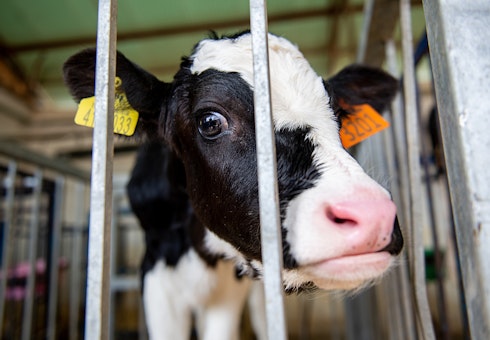
But look across to the farm next door and you'll see somebody still getting plenty to drink. The Cow in the Room.
By 2055, the Government reckons the UK will be short of 5 billion litres of water every single day. Ministers talk about fixing leaks, building reservoirs and rolling out smart meters. Fair enough. But hardly anybody is talking about the water we're using simply because we choose to eat animals.
Humanity pours around a third of all the freshwater it uses into farming animals. That's an astonishing amount for one of the least efficient ways of producing food. Here in Britain we hide some of the problem by importing feed crops like soy, meaning around 98% of meat's water footprint comes from growing animal feed overseas. We offshore much of the damage, but that doesn't mean our own water supply escapes the consequences.
Animals drink a lot of water... and as the planet heats up they'll need even more.
Government guidance says a dairy cow producing milk can drink up to 155 litres a day. A sow feeding piglets needs between 18 and 23 litres, while chickens consume around half a litre each. Multiply that across the UK's livestock population, around 227 million animals in June 2025, and we're talking somewhere between 432 million and one billion litres of drinking water every single day.
At the top end, that's enough water to meet the direct daily needs of 7.5 million people.
And that's before we even get to processing meat. Producing a tonne of beef carcass uses around 3,500 litres of water.
There's also a comforting myth that grazing animals are somehow water neutral because rain falls on fields and grass grows naturally. But that's yesterday's climate.
Hotter summers and longer dry spells mean pasture increasingly fails just when animals need feeding. Recent droughts have left farmers short of grass, forcing them to bring livestock indoors and buy in feed instead. Much of that feed comes from crops that increasingly need irrigation, using even more of our limited water.
It doesn't take much to see where this is heading. Animal agriculture is living on borrowed time.
And it isn't just about how much water the industry uses. It's about what it does to the water we've got.
Water companies have to remove nitrogen and phosphorus from our rivers, much of it coming from livestock farming. They've made a complete mess of it, but we're the ones picking up the bill. Over the next five years, water bills will rise by £6.8 billion to tackle nutrient pollution. On top of that, Ofwat wants another £3 billion to help farmers manage slurry, fence livestock away from rivers and create buffer zones alongside waterways.
Think about that. We pay for the pollution, then we pay to clean it up as well.
Here's the thing... there is another way.
If we tackled the problem at source and shifted towards a plant-based diet, we'd save billions of litres of precious water every year, reduce pollution and free up 56% of the UK's land to be rewilded. That's good for nature, good for our climate and good for our water security.
We're at a crossroads. We can carry on pretending this conversation is too difficult to have, or we can face the facts and deal with the causes instead of endlessly paying for the consequences.
Because waiting until the taps run dry isn't much of a strategy...:)
Government
September 26, 2026
Campaign
September 18, 2026
Government
September 12, 2026
Energy Crisis
August 28, 2026