Government
Five Policies For Growth
October 20, 2026

August 13, 2026By: Team Dale
Nuclear power isn’t a solution to climate change. It’s one of its victims
Here’s the thing about tackling the climate crisis. It’s not enough to build low-carbon energy. We need energy that actually works in the climate we’re creating.
And that’s where nuclear power has a rather big problem.
For decades, nuclear has been sold as the serious, grown-up answer to climate change. Governments have looked past the huge cost and chronic delays of nuclear projects like Sizewell C because nuclear supposedly gives us reliable low-carbon electricity.
But what happens when the climate crisis starts knocking nuclear power stations offline?
We don’t need to imagine it. It’s happening.
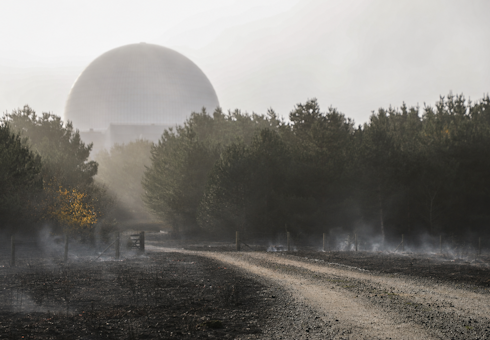
As July drew to a close, firefighters tackled more than 500 blazes across London in just 24 hours. Crews also travelled 100 miles to fight a wildfire on the Suffolk coast, where attention quickly turned to something else in the neighbourhood: Sizewell B nuclear power station.
Wildfires and nuclear power are not a great combination.
Nuclear stations generate enormous amounts of heat and need air and water for cooling. Sizewell B escaped disruption this time, with EDF saying it could continue operating because the wind kept wildfire smoke away from Sizewell B.
Think about that for a moment. The weather kept our supposedly ultra-reliable power station running.
Had the smoke reached the site, around 3% of Britain’s electricity production could have been affected. That sounds small until you remember that extreme heat can also push electricity demand higher. Lose a big nuclear plant at precisely the moment we need more power and what fills the gap? Usually gas.
So we pay through the nose for nuclear reliability, then potentially burn expensive fossil fuels when that reliability disappears. Great system...:)
And Britain isn’t alone.
France gets around 70% of its electricity from nuclear, which makes what happens there pretty instructive. During July’s heatwave, extreme heat forced French nuclear reactors to shut down or reduce output, helping drive an almost 9% fall in nuclear generation.
Across south-east Europe, drought has caused similar problems. Low water levels on the Danube have hit reactors in Hungary and Romania. On 3 August, around 2.44GW, roughly 40% of south-east Europe’s nuclear capacity, was offline amid drought.
This is the basic contradiction. Nuclear is supposed to help us survive climate change, but climate change is making nuclear less dependable.
So what about Sizewell C, Britain’s shiny new nuclear bet?
Building beside the sea helps solve one problem. There’s plenty of cooling water. But it creates another.
Sizewell C, along with nuclear waste that must remain secure and dry for generations, is being built on a sandy Suffolk coastline vulnerable to climate-driven sea-level rise.
You really couldn’t make it up.
Inland nuclear plants face drought and overheating. Coastal ones face rising seas and flooding.
Forget being stuck between a rock and a hard place. Nuclear is stuck between drought and the deep blue sea.
The maddest part is that we don’t need to make this gamble.
Solar power now costs less than half as much as nuclear power. And when the sun really gets going, exactly when heatwaves put pressure on other parts of our energy system, solar gets going too.
During four days of the June 2026 UK heatwave, solar power generated 484GWh of electricity, 46% more than during the same period a week earlier.
And we’ve barely scratched the surface.
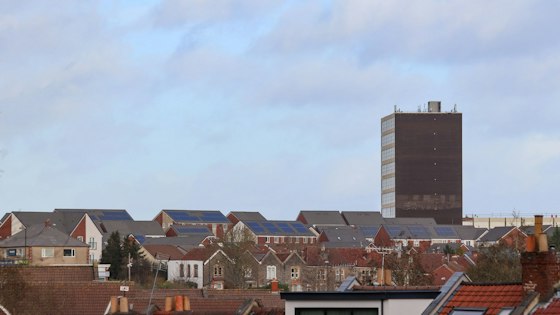
Our Rooftop Revolution study into Britain’s solar potential found that more than 65% of British homes have rooftops technically suitable for solar. Put panels on those roofs and we could generate more than 13% of Britain’s total electricity demand, almost replacing nuclear’s contribution to the grid.
No radioactive waste hanging around for generations. No mega-project taking decades to build. No dependence on enough river water, the right sea defences or, apparently, the wind blowing wildfire smoke in the right direction.
The climate crisis changes everything. Our energy system has to change with it.
That means systemic change, not spending tens of billions trying to preserve an energy technology designed for the climate of yesterday. We need green energy that is cheaper, faster to build, distributed across the country and resilient enough for the world we’re heading into.
On cost, speed, safety and resilience, renewables win.
We have the wind. We have the sun. We have the technology. And unlike nuclear, we don’t have to wait decades for it.
We can build another way. We just need to get on with it.
Government
October 20, 2026
Government
September 26, 2026
Campaign
September 18, 2026
Government
September 12, 2026