Government
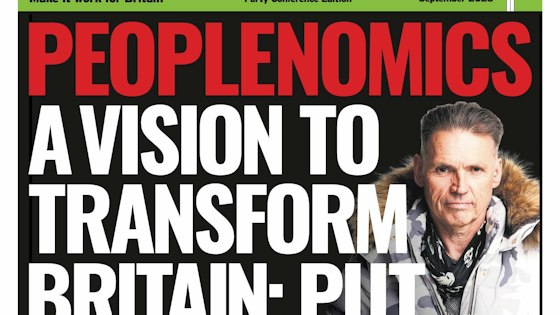
Peoplenomics: Putting People Back at the Heart of Britain’s Economy
September 26, 2026

June 29, 2026By: Team Dale
In a major intervention, green industrialist and Labour donor Dale Vince OBE has called for a total overhaul of Labour’s approach to Net Zero, warning that wasteful spending and ill-conceived policies are fuelling public scepticism and handing Reform UK one of its most potent political weapons: the claim of “stupid net zero”.
As part of a radical reset, Vince proposes abolishing DESNZ, transferring responsibility for energy policy to the Department for Business, while ditching Net Zero in favour of the green economy and giving that responsibility to the Treasury to sit alongside its responsibility for the conventional economy.
Labour’s new leader, Vince says, should immediately claw back the most egregious spending plans of DESNZ — such as the £22 billion earmarked for carbon capture (£10 billion in this Parliament), a technology that does not work anywhere in the world and likely never will, and the £3 billion of subsidies for heat pumps. Neither can move the dial on our carbon commitments in any meaningful way.
Further potential savings include £14 billion committed to a new nuclear reactor at Sizewell, and nearly £3 billion more for the untried, unproven and uncosted concept of mini nuclear power stations. Throw in £2 billion committed to hydrogen production, something that should sit in the commercial space, and the £8 billion budget for Great British Energy, which invests in the same projects as the private sector, and the total cash committed to questionable, or just plain daft, projects is a whopping £53 billion. Money that could be far better used than under DESNZ’s plans, not just economically but also in carbon reduction terms.
While Vince believes the Department for Energy Security and Net Zero (DESNZ) has introduced some positive initiatives, he argues that the department has become bloated, expensive and increasingly disconnected from economic reality. This, he says, is undermining public support for the green transition and jeopardising the significant opportunities offered by the green economy. According to the CBI, the UK’s green economy now generates over £100 billion a year, employs more than one million people and continues to grow at four times the rate of the conventional economy.
According to Vince, many current policies provide Reform UK with ammunition to attack Net Zero.
"Many of these initiatives are plainly a bad use of money. The return to our economy from these massive investments amounts to roughly net zero — nothing. By scrapping carbon capture and heat pump budgets, we could free up around £13 billion during this Parliament for priorities such as defence, without slowing our progress towards the actual goal of Net Zero."
Vince argues that reintegrating energy policy into the business department, as it was ten years ago, would place responsibility for one of the biggest challenges facing British businesses — the cost of energy — where it belongs. He says one of DESNZ’s greatest failures has been its inability to "break the link" between electricity prices and international gas prices, despite repeated promises and a strong economic case for reform.
The founder of Britain’s, and the world’s, first green energy company believes government policy should focus on measures that deliver jobs, economic growth and reductions in the cost of living. Government policy and communications should focus on the green economy rather than Net Zero.
Not only is that easier to understand and support, but making the transition to a green economy will deliver Net Zero in any event. We need to move away from the language of giving things up and the policy of spending vast sums on vanity projects, and instead use the language of gain and benefit, alongside policies that prioritise economic growth through new green technology. By ending the obsession with, and huge expense of, Net Zero policy, Vince believes Labour can neutralise Reform UK’s attacks and build broader public support for a pragmatic green growth agenda.
Dale Vince said:
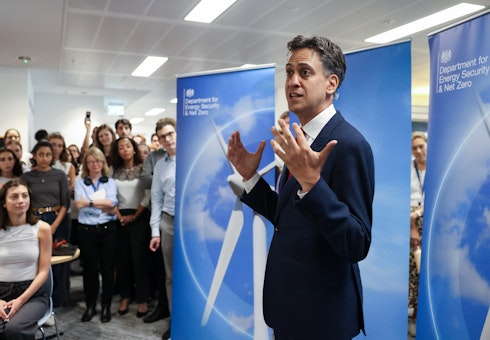
"A change of leader gives Labour the opportunity to take a new approach. The country is crying out for bold changes that will make a difference — a reset of our approach to Net Zero is the ideal starting place. Ditching Net Zero, breaking up DESNZ and clawing back vast sums of public money is exactly that: a bold policy move that will make a difference. Miliband’s DESNZ has gifted Reform with one of their most potent attack lines — ‘stupid net zero’. It’s a line that works because it contains an element of truth.
"Rishi Sunak once called me an eco-zealot for my support of Just Stop Oil — he was wrong. Not drilling in the North Sea was, and is, a pragmatic argument based on economic and ecological sense. While millions of people in our country struggle with the cost of simply living, it is obscene to commit such vast sums of money to projects like carbon capture and to subsidies for families that can afford to buy a new car or a heat pump. It is indefensible, and we need to change it."
Dale Vince is calling on Labour to:
The Government has committed £22 billion to carbon capture and storage (CCS) over the next 25 years, despite the technology yet to prove itself at scale anywhere in the world.
Vince argues that the policy risks becoming a major subsidy programme for oil and gas companies while placing unrealistic expectations on an unproven technology.
"We might as well pin our hopes on the tooth fairy," he said.
With support worth around £1 billion a year for 25 years, Vince argues that the duration of the subsidy demonstrates how far carbon capture remains from commercial viability — a quarter of a century.
Current heat pump grants primarily benefit relatively affluent households that can afford the significant additional costs involved.
Vince argues that taxpayers should not be subsidising a niche technology for people able to afford the extra £10,000 or so required, as well as the higher energy bills that typically result.
Vince is calling on the Government to end what he describes as the "utterly mad system" that ties the price of green electricity to the international price of fossil gas.
He argues that, in 2023 alone, breaking the link would have saved £43 billion across the economy, including £30 billion for businesses and £13 billion for consumers — equivalent to almost £400 per household. According to Vince, high energy costs remain one of the biggest obstacles to British industrial competitiveness and have contributed to challenges faced by major manufacturers, including British Steel.
Vince argues that government support for new electric vehicle purchases disproportionately benefits a relatively small number of better-off people.
With just over one per cent of the population buying a new car each year, he believes such subsidies are difficult to justify at a time when millions of households are struggling with the cost of living. The current grant, worth almost £4,000 per vehicle, represents a total commitment of around £650 million.
DESNZ has £14 billion set aside for Sizewell, which requires closer to £40 billion to complete and will not produce any power for another 15 to 20 years — ten years after we are expected to be generating 100% of our electricity needs from wind and solar. So what do we actually need it for?
DESNZ says the answer is energy security, but if that is true, what will we do during the ten-year gap? Just last week, the boss of EDF, the French company behind Sizewell, said Britain has too much power on the grid right now and should stop building green energy.
DESNZ is making a near-£3 billion blind bet on small modular reactors (SMRs) — effectively a series of mini Sizewells. They do not yet exist commercially anywhere in the world, and we have no idea what the energy they produce will cost. Nor, it appears, does DESNZ. As above, do we actually need them? It is another very un-businesslike use of public money.
Add to that the £2 billion committed to hydrogen production, which is of questionable value to the country, and an area that the private sector is already addressing.
Vince argues that Great British Energy is investing public money in projects that private investors are already funding and, therefore, bringing nothing new to the country.
He believes government resources should instead be directed towards areas where genuine market failures exist and where public investment can unlock additional economic value. That is another £8 billion.
Government
September 26, 2026
Campaign
September 18, 2026
Government
September 12, 2026
Energy Crisis
August 28, 2026