Government
Peoplenomics: Putting People Back at the Heart of Britain’s Economy
September 26, 2026

June 11, 2026By: Team Dale
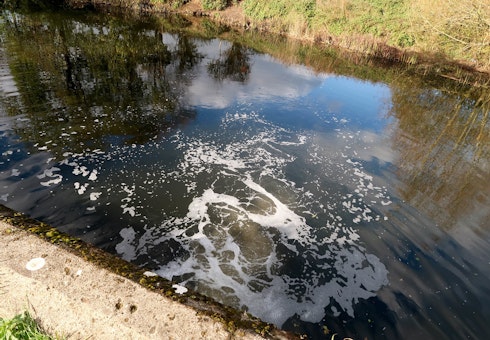
Britain's rivers are in a mess. Not because nature has failed us, but because our privatised water industry has.
Which makes the latest news about mushrooms all the more remarkable.
Researchers have found that stacking turkey tail mushrooms across riverbeds can remove around 80% of E. coli bacteria from waterways. That's a big deal in a country where water companies spent more than two and a half million hours dumping raw sewage into our rivers in 2025.
It's another reminder that nature is often smarter than we are. While we've spent decades turning rivers into open sewers, the natural world is quietly showing us how to clean them up.
And it doesn't stop there.
These mushrooms are also helping tackle pollution from industrial farming. They're absorbing huge amounts of phosphorus and nitrogen from rainwater running off fields loaded with manure. Early results show they can remove 83% of phosphorus and 35% of nitrogen. That's an impressive bit of natural engineering.
More trials are now underway around the country. Let's hope they work.
But here's the thing...
Should we really need mushrooms to do the job we're already paying a multi-billion-pound industry to do?
For years, water companies have taken money out instead of putting it in. They've loaded themselves with debt, paid billions to shareholders and underinvested in the infrastructure we all rely on. Now we're being asked to pay higher bills to clean up the mess they've made.
Take Southern Water. Customers face bill increases of more than 50%, despite repeated failures and contamination problems. That's quite a deal if you're a water company. Pollute rivers, underinvest for years, then send customers the bill for fixing it.
Against that backdrop, it's no surprise that water companies are enthusiastic about mushroom barriers. Anglian Water has called them a cheap, green solution. A win-win, apparently.
But is it?
The trials themselves are costing £1.5 million. And while that's small change compared to the wider costs of river pollution, we're still left with the same question. Are we fixing the problem or simply finding cheaper ways to live with it?
Nature-based solutions are fantastic. We should embrace them wherever they work. We've spent too long ignoring the power of the natural world.
But prevention beats cure every time.
Instead of looking for increasingly clever ways to remove sewage from rivers, how about stopping it getting there in the first place?
That means real accountability. It means proper regulation. It means ending the cosy relationship between regulators and the companies they're supposed to police. And if the industry can't deliver a basic public service without poisoning our waterways, then we should ask whether it belongs in private hands at all.
Because this isn't really a story about mushrooms.
It's a story about a failed model of privatisation and the extraordinary lengths we're now going to in order to deal with its consequences.
The mushrooms may well help clean up our rivers. That's good news.
But let's not forget who polluted them in the first place.
They broke it. Nature might help fix it. Let's make sure the benefits flow to all of us, not simply to the companies that created the problem.
People before profit... always.
Government
September 26, 2026
Campaign
September 18, 2026
Government
September 12, 2026
Energy Crisis
August 28, 2026