


Government
Peoplenomics: Putting People Back at the Heart of Britain’s Economy
September 26, 2026

From plastic-eating bacteria to Chernobyl’s radiation-shielding mushrooms, the news is full of nature’s potential solutions to humanity’s problems. But what is wild is often complicated, making it tricky to know which ones are the most scalable and realistic. Luckily, some obvious candidates are staring us right in the face.
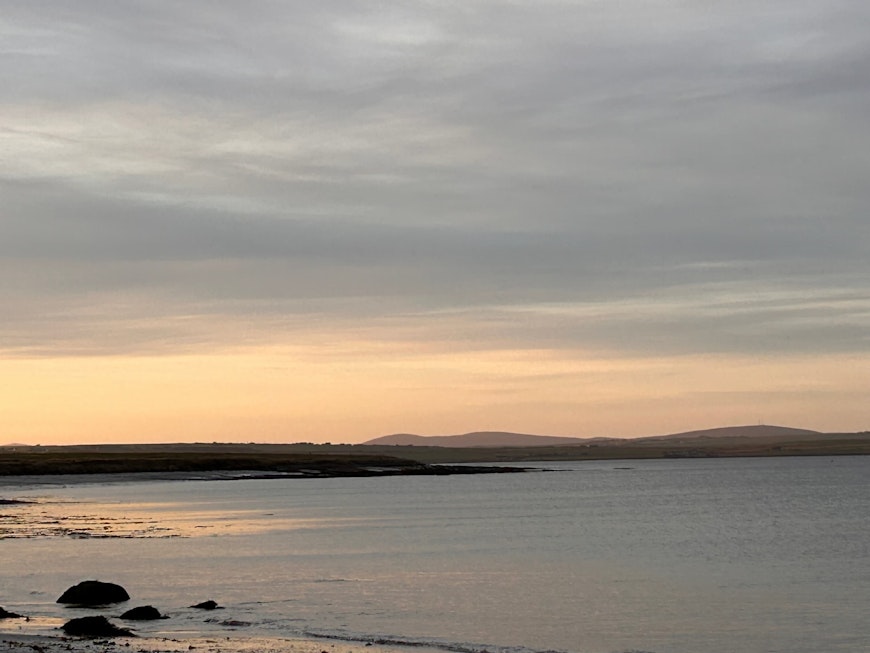
Introducing the Green Britain Foundation’s oyster restoration project in Orkney, where we are planning to release 15 million juvenile oysters bred using pioneering new methods. Just like beavers who do so much for the wildlife around them that they are called keystone species, oysters are another of nature’s wonders that just might save us – and the natural world – from ourselves.
So what makes them so special?
With reefs almost as big as Wales, Britain used to be one of the oyster capitals of the world – so much so that the Romans used to export them across their empire on ice. Fast forward a couple of millennia, and, just as the Industrial Revolution started polluting the world, we almost ate oysters to extinction. London alone went through about 700 million in 1864.
That was bad news for our waterways. Oysters are big drinkers – a fully grown one can pump and clean up to 200 litres of water every day by straining out silt, microalgae, and bacteria. Oysters are looking for nutritious particles to digest, but they also take care of anything inedible they come across by depositing it neatly onto the seabed.
As a result, oysters are nitrogen sponges, which is handy in a nation whose coasts are permanently flooded with fertilisers and sewage. They consume the algae that thrive in the muck and lock their nitrogen away inside them. Oysters’ waste also helps bacteria that turn the nitrogen back into a harmless gas.
All this clears the water around oysters, enabling precious sunlight to penetrate deeper and stimulate the growth of carbon-capturing seagrass. Everyone from humans to plants benefits from the cleaner waters. And unlike privatised water companies, oysters don’t saddle us with debts and send their profits to offshore tax havens.
Where there is now only sand and mud, our coastlines used to be made up of huge reefs of oysters growing upwards from the seabed. Just like corals (albeit less colourful), these reefs were hotspots for biodiversity.
Unlike anything we could build, oyster shells are naturally irregular in shape. As they attach to one another, they provide thousands of tiny cracks and coves for fish to shelter and lay their eggs in. Oyster reefs also slow the sea down as it passes through them. That’s being explored to protect our coastlines from rising seas, but we know that the calm waters are of great benefit to their neighbouring animals.
Given how eradicated our oyster populations were, the before and after evidence from small-scale restoration projects so far is clear – bring oysters back to Britain, and hundreds of species of marine animals will come back too.
One of the most exciting aspects of restoring oyster reefs is their potential to draw carbon from the sea and the atmosphere, and help fight the climate crisis as a result.
There is a genuine difference of scientific opinion around the role oysters play in carbon removal, but research suggests that each oyster can sequester around 5.5g of CO₂ per year. With 15 million oysters planned across 100 hectares, our project could capture up to 75.75 tonnes of CO₂ annually. If all goes to plan, that number could increase a thousand-fold.
Scientists are calling for more research, and not only will our project help test oysters’ potential to absorb carbon, it will do so with as little human intervention – and associated emissions – as possible. Rather than being tightly managed or artificially maintained over time, the plan is to enable natural reef systems to develop independently.
However, getting the oysters off to a strong start is vital. Disease can be a big problem for molluscs, so we’ve carefully sourced Orkney’s from other parts of Scotland that are certified as being in good health, and we’re putting them in quarantine for good measure. Only once they’re big enough to survive predation will they be put into the wild.
The key is to create the conditions for nature to take care of itself, so ultimately we can get out of the way and let it take care of us, too.
Government
September 26, 2026
Campaign
September 18, 2026
Government
September 12, 2026
Energy Crisis
August 28, 2026